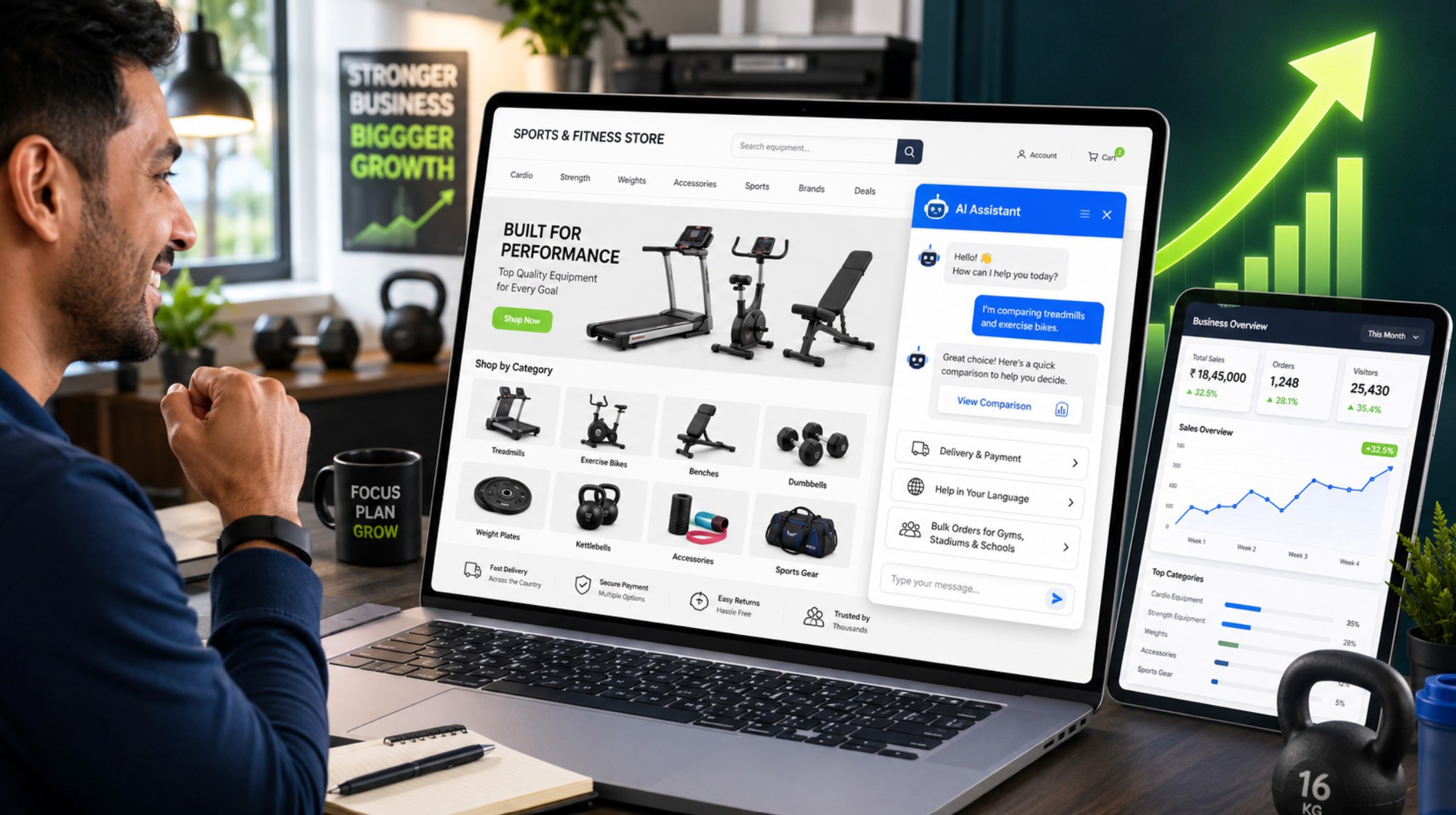
Why Website AI Agents Are Growing Up in 2026
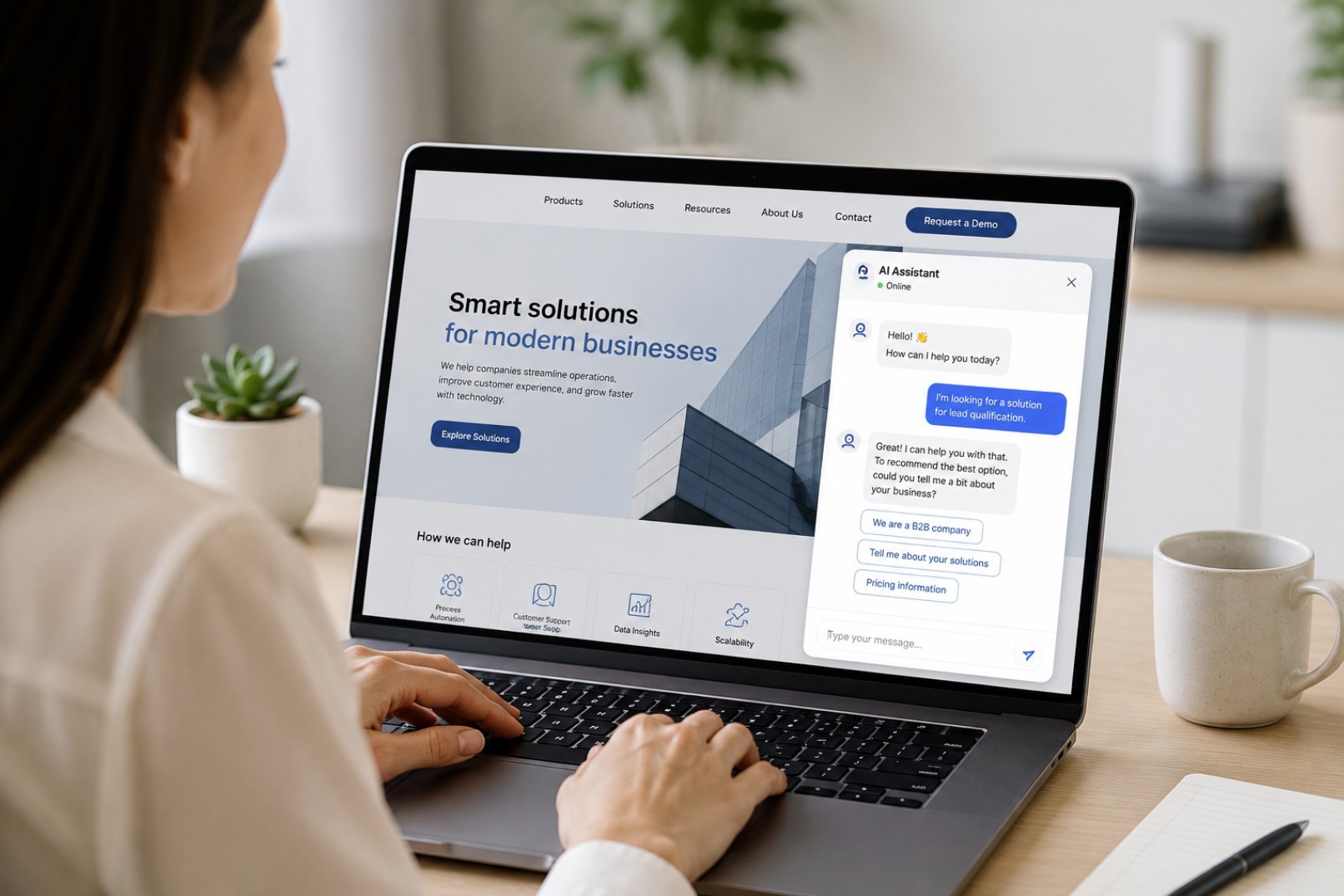
Just a year ago, adding an AI assistant to a website still felt new. A company could put a chatbot in the corner of the screen, connect it to a knowledge base, and proudly say: “We now have AI on our website.”
In the middle of 2026, this is no longer enough. The market has changed very quickly. Customers are no longer impressed by the fact that an AI assistant can answer basic questions. They expect it to understand their situation, guide them to the right product or service, and help them complete the next step.
In other words, website AI is moving from conversation to action. The numbers show this clearly. Salesforce reports that adoption of AI agents in customer service organizations increased from 39% in 2025 to 66% in 2026. That is a 1.7x increase in one year. Even more interesting, 70% of organizations using AI agents say they see measurable value within 60 days.
This explains why the conversation around website AI assistants has become more serious. Businesses are not asking only, “Can this AI answer questions?” They are asking, “Can this AI help us sell, support, qualify, onboard, and serve customers better?”
From chatbot to business assistant
The first generation of website AI assistants mostly worked like smarter FAQs. They answered questions about opening hours, prices, delivery, services, locations, or company policies. This was useful, but limited. And now, we can see such systems on many websites, but alas, they do not impress anyone anymore.
Today’s better AI website agents do much more. They can qualify leads, ask follow-up questions, recommend the right solution, book meetings, collect project requirements, update CRM records, and hand over the conversation to a human specialist when needed.
The chat window is only the visible part. The real value is behind the scenes: connection to business systems, company knowledge, sales workflows, support processes, and customer data. That is why the word “agent” matters a lot: a chatbot just talks, but an agent acts.
Which industries are adopting AI assistants fastest?
The strongest adoption is happening in industries where customer conversations are frequent, repetitive, and commercially important. Customer service, SaaS, e-commerce, retail, telecom, banking, insurance, travel, healthcare, education, and real estate are among the most active sectors.
This makes sense. These businesses receive many similar questions every day. Customers need fast answers, but companies cannot scale human support endlessly. In customer service more broadly, Intercom reports that 82% of senior leaders invested in AI during the past year, and 87% plan to invest further in 2026. But only 10% say they have reached mature deployment, where AI is fully integrated and working at scale.
This is an important detail. Many companies are already experimenting with AI assistants. Much fewer have built truly integrated AI agents that reliably support the business. So the market is growing fast, but it is still immature.
Where adoption is only beginning
Some sectors are moving more carefully. Legal services, public sector organizations, complex B2B manufacturing, regulated financial advice, medical diagnosis, and highly customized professional services are adopting AI website assistants more slowly.
The reason is not lack of interest, it is... risk. In these industries, a wrong answer can create compliance, legal, financial, or reputational problems. For example, UK financial regulators have already raised concerns about consumers trusting general AI tools for financial advice, while most financial AI use still remains concentrated in back-office tasks.
This does not mean these sectors will avoid AI assistants; they will just need more controlled systems: approved knowledge bases, human review, clear escalation rules, audit trails, and limited autonomy.
For regulated industries, the winning model is “let AI handle the safe parts and bring humans in at the right moment.”
What changed since 2025?
The biggest change is expectation. In 2025, many companies were still testing AI assistants as experiments. In 2026, pressure from leadership has increased sharply. Gartner found that 91% of customer service and support leaders are under executive pressure to implement AI in 2026.
At the same time, companies are becoming more realistic. They understand that installing an AI widget is easy. Making it useful is harder. A good AI website agent needs business context, clean knowledge, clear workflows, CRM or system integrations, escalation rules, measurement, and regular improvement. Without these elements, the assistant becomes another shiny tool that gives generic answers. But with them, it becomes a part of the company’s revenue and service engine.
What should we expect by the end of 2026?
By the end of 2026, AI website assistants will probably become normal for digital businesses, especially in customer support, SaaS, e-commerce, professional services, travel, healthcare access, and education. But the market will split into two groups.
The first group will use basic AI chatbots. These assistants will answer questions, reduce some support load, and improve response speed.
The second group will build real AI agents. In addition to talking with visitors these systems will will guide decisions, qualify opportunities, collect data, trigger workflows, and support human teams. This second group is where the real business value will be.
Gartner also predicts that 40% of enterprise applications will include task-specific AI agents by the end of 2026, up from less than 5% in 2025. That suggests website agents will not remain isolated tools. They will become connected to broader enterprise systems.
The future is not “more chat”
The future of website AI is better execution: customers visit a website because they want something: information, pricing, support, a consultation, a purchase, a recommendation, or a decision. The companies that win with AI assistants will be the ones that understand this. They will treat it as a new digital team member, that can welcome visitors, understand intent, support the customer journey, and help the business move faster.
In 2026, simple chatbots are becoming ordinary. AI agents that can create real business outcomes are only beginning. To see an example of such smart, proactive agent that acts just like a team member, visit our agent and start conversation with it to see how it works: https://bizdriver.ai/