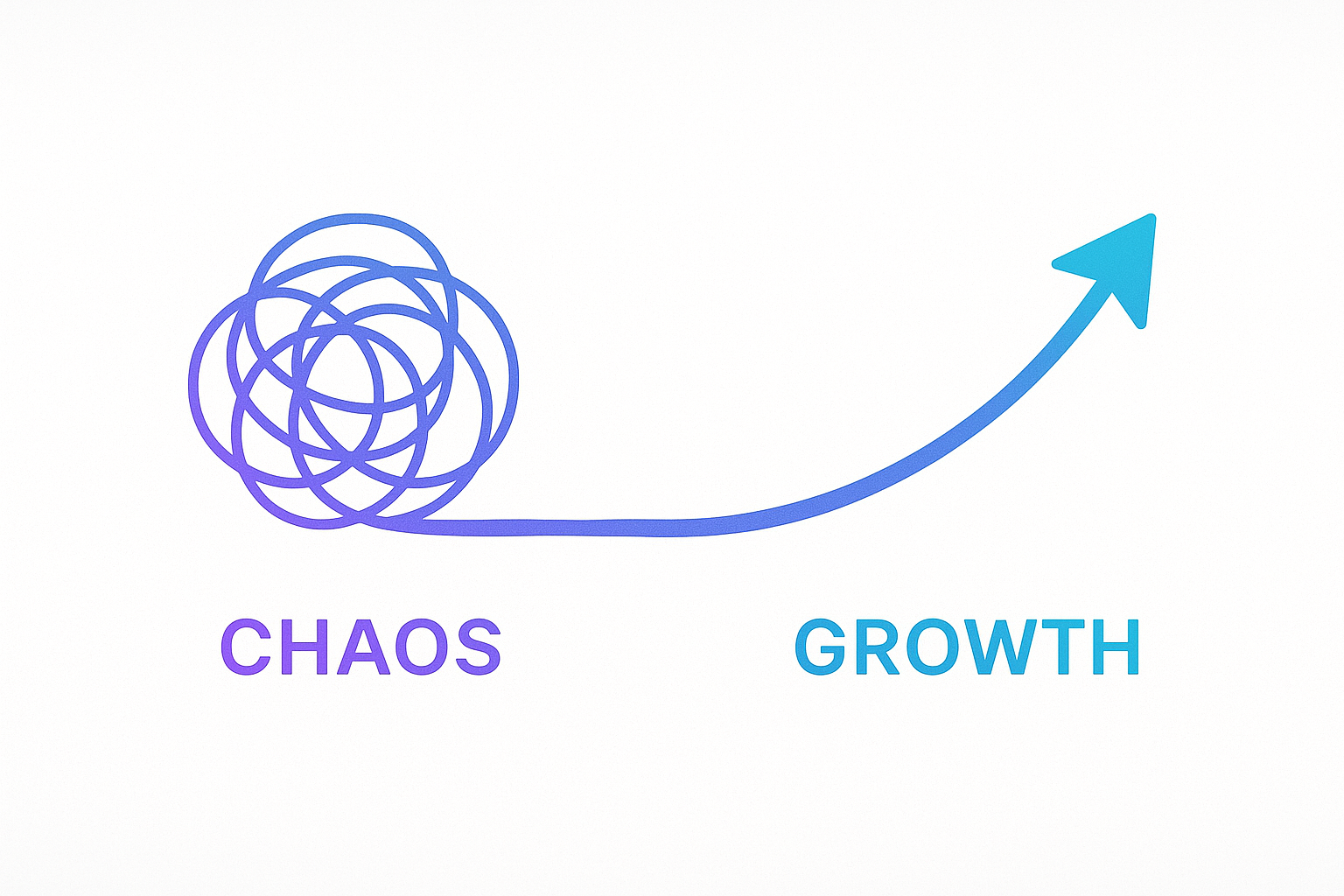
How AI Is Changing Work: From Specialist to AI Manager

For the third time today, I heard a version of the same observation: people who once happily disappeared into code are now spending their days explaining things to artificial intelligence. There is a certain cosmic comedy here. You find a profession offering long stretches of concentration, precise rules, and the comforting possibility that headphones will discourage conversation. Then technology advances, and suddenly you are coordinating a small department of digital assistants.
One needs more context. Another has misunderstood the assignment. A third has confidently solved a problem you do not have… Congratulations: you are in management.
Of course, the silent programmer is a caricature. Good software has always depended on communication, and introversion has never meant an inability to communicate. Scientists explain methods; analysts defend assumptions; writers negotiate meaning. But the balance of the working day is changing: in workflows built around AI agents, more effort can move into specifying, delegating, reviewing, and integrating work. The hands doing the first draft may be artificial. The responsibility remains very human. And this unexpected career development reaches well beyond people who write code.
In Stack Overflow’s 2025 Developer Survey, 84% of respondents said they used or planned to use AI tools, while 51% of professional developers reported daily use. These are survey results, not a census (and using an assistant is different from supervising autonomous agents) but they show how firmly AI had entered the working routine. 2025 Stack Overflow Developer Survey
By August 2026, Anthropic reported approximately 30,000 research and engineering agents active at any one time on its most-used internal platform. That is one AI company’s experience, not a picture of the average workplace. Still, “managing a crowd of agents” has acquired a rather literal meaning. anthropic.com
The surprising part is how familiar some of the management problems look. In its 2025 account of building a multi-agent research system, Anthropic described early agents that created 50 subagents for simple questions, searched endlessly for sources that did not exist, and distracted one another with excessive updates. anthropic.com Apparently, we have taught machines to reproduce the office before teaching them to keep the meeting short. The same account describes agents duplicating research because their assignments were too vague. Clear objectives, boundaries, and output requirements helped. anthropic.com Anyone who has managed a project may feel a small, exhausted flicker of recognition.
An AI agent is software that can take several steps toward a goal, using tools and adjusting its next action based on results. Give several agents different roles and you can explore multiple directions at once. But by doing so, you also create more opportunities for misunderstandings, duplicated effort, incompatible outputs, and escalating costs.
They can seem like unusually gifted children: astonishingly capable in one moment, bewilderingly literal in the next. But the metaphor has limits. Agents do not have a child’s understanding, intentions, or sense of responsibility. Their apparent distraction can reflect missing context, weak instructions, or failures in the surrounding system. A patient tone may make the experience more pleasant for us; reliable controls make it safer and more useful.
This is where communication becomes part of the machinery.
“Improve this” leaves an impressive amount of room for interpretation. Improve the speed? The appearance? The accuracy? The likelihood that someone approves the budget?
A useful brief explains the goal, relevant context, constraints, expected output, and evidence needed to accept the result. In software, that may include tests and limits on which files can change. In research, it may mean source requirements and explicit treatment of uncertainty. In writing, it includes audience, purpose, voice, and factual boundaries.
Perfect grammar is less important than clear meaning. The machine does not need us to remember every rule from school. It needs us to say what we mean—including the parts we previously assumed were obvious.
Consider how that changes familiar work:
|
Profession |
Work AI can assist with |
Human judgment that becomes especially visible |
|
Software engineering |
Drafting code, tests, and documentation |
Architecture, integration, security, and verification |
|
Mathematics and theoretical science |
Exploring candidate solutions and computational experiments |
Assumptions, proof, validity, and significance |
|
Analysis and social research |
Organizing material and proposing patterns |
Data quality, context, bias, and interpretation |
|
Writing and editing |
Generating drafts and alternative structures |
Originality, voice, factual integrity, and editorial purpose |
These are possible divisions of work, not a prediction that every profession will follow one timetable.
There are already exciting examples. In 2025, Google DeepMind reported that AlphaEvolve, which combines language models with automated evaluation, improved the best-known solutions in 20% of a set of more than 50 open mathematical problems. That means progress on those problems, not that it solved 20% of mathematics. Google also reported that an algorithm it discovered recovered an average 0.7% of Google’s worldwide compute resources through better scheduling. Google DeepMind
At Google’s scale, a decimal point can do a considerable day’s work. The important detail is the evaluation loop: proposed solutions were run and scored against defined criteria. The achievement depended on a system for checking ideas. Google DeepMind That same principle matters when the result is an ordinary business report rather than a mathematical advance. A convincing answer still needs evidence.
Stack Overflow’s survey found that 66% cited frustration with AI answers that were nearly correct, and more respondents distrusted AI accuracy than trusted it: 46% versus 33%. 2025 Stack Overflow Developer Survey “Nearly correct” is an awkward category. It sounds encouraging until you apply it to a payment calculation, a research citation, or the permission settings on a customer database. And more output does not automatically mean more productivity.
In METR’s early-2025 randomized study, 16 experienced open-source developers completing 246 tasks took 19% longer with AI tools. That finding concerned particular tools, developers, and mature projects. In February 2026, METR said newer tools likely offered greater benefits, but selection effects made its follow-up results unreliable for estimating the size of the improvement. METR The practical lesson is to measure the whole job: briefing, generation, review, correction, and integration. A draft produced in seconds can still require an expensive afternoon.
So what helps someone adapt to this new working life? Start with a bounded task. Define what successful completion looks like. Give each agent a distinct responsibility. Make sources, tests, and unresolved questions visible. Set limits on time, spending, and actions. Keep consequential decisions within an explicit approval process. Then inspect the result with the expertise that made you useful before AI arrived. This is also a workplace design issue. Organizations need to allow time for review and learning. Asking someone to supervise several streams of generated work while preserving all their previous output targets can turn supposed assistance into another source of overload. And we should preserve opportunities to practice the craft itself. A junior developer needs experience reasoning through code. A researcher needs to learn how an argument fails. A writer needs to discover why a paragraph does not work. Supervising answers is harder when you have never had the chance to build your own judgment.
For people who love quiet concentration, there is some reassuring news: clear communication can happen in a thoughtful written brief. It does not require becoming the loudest person in the room. But it does require making our thinking more explicit.
We have spent years learning how to do difficult work. Now many of us are also learning how to describe it, divide it, and recognize when a remarkably fluent assistant has gone in the wrong direction. You may still have your headphones. You may simply need to pause the music occasionally to find out why your digital research department has hired another 49 people.