From Chatbot to AI Agent: A Real Estate Story
A customer told me a story of their business that perfectly explained the difference between a traditional website chatbot, live chat, and a real AI website agent.
The company in question is a real estate agency. Its properties are scattered across a large area, sometimes many miles away from one another. For years, the agency followed a very traditional process. A customer would call or send an email. An employee would invite them to the office. They would sit together, drink coffee, discuss budgets, preferred neighborhoods, the number of bedrooms, parking, schools, pets, renovation plans, and many other details. Only after this introductory meeting would the customer receive a list of properties to consider. It was polite, personal, and familiar. It was also rather slow. The agency rented a comfortable office partly because almost every customer was expected to visit it. Employees spent a great deal of time discussing the same preliminary questions again and again.
Then the company installed a chatbot on their website. At first, everyone was excited. The chatbot could ask whether a visitor wanted to buy or rent. It could ask about the preferred area and collect a phone number. It looked modern. It moved. It greeted people enthusiastically. But unfortunately, it was not particularly clever. The moment a visitor asked, “Is there a good school nearby?” or “Can I keep a large dog in this apartment?” the chatbot usually became very philosophical. In other words, it stopped being useful.
The company then introduced live chat. This was certainly better. Customers could speak with a real person directly on the website. They received proper answers and no longer had to make a phone call. However, from the company’s perspective, something curious happened. The work did not disappear. It simply moved from the telephone to a little chat window. Employees still answered the same questions: Is the property available? Does it have parking? How much is the deposit? Can I see it on Saturday? Is the neighborhood quiet? How far is it from the city center? Live chat improved customer service, but it did not save much employee time.
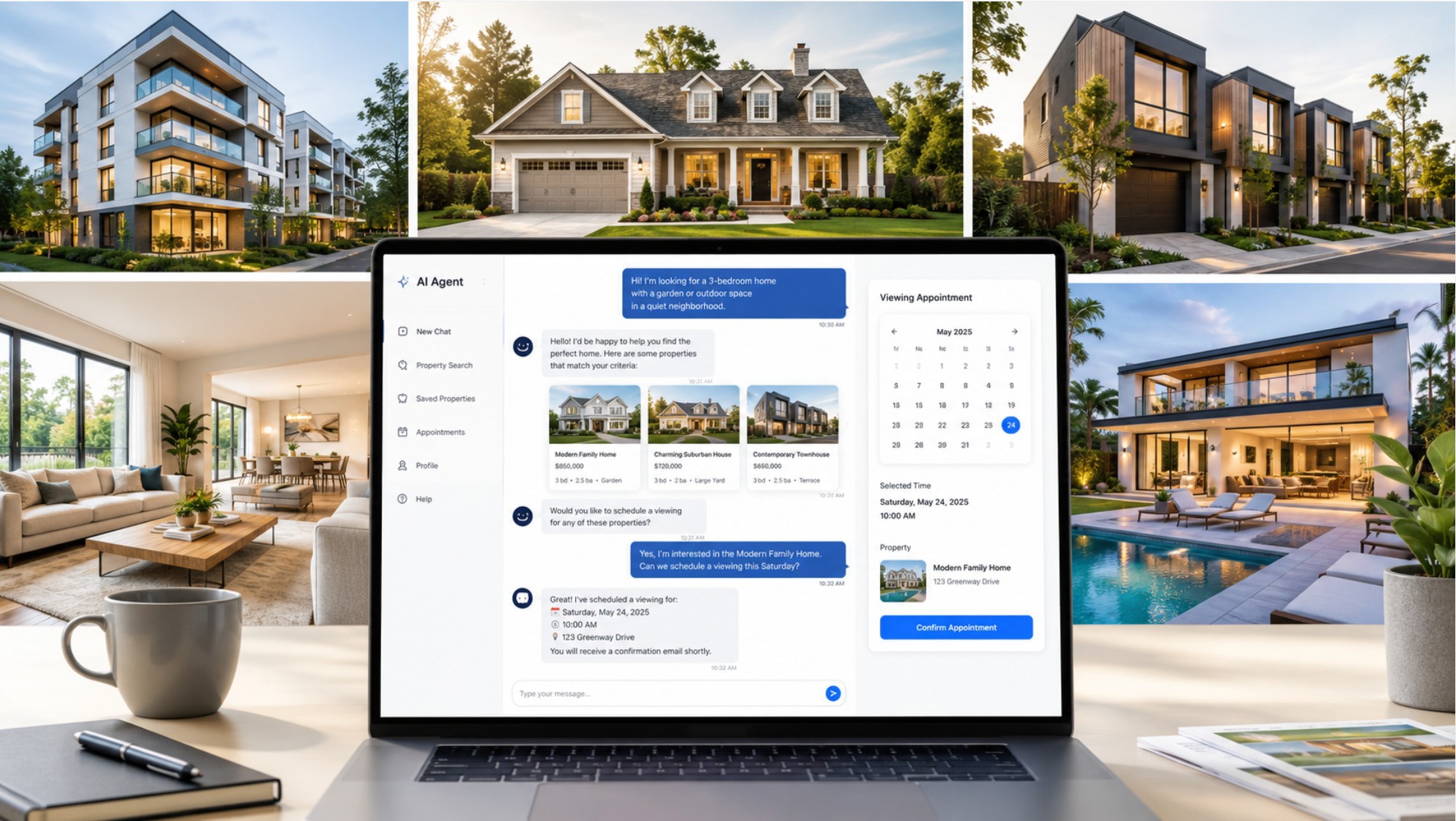
Then the agency introduced a real AI agent on its website. And this is where the story became interesting. The AI agent did not merely wait for questions. It could hold a proper preliminary conversation. It asked visitors what they were looking for, understood their priorities, clarified the budget, suggested relevant properties, answered questions about each option, and arranged appointments.
One evening, a woman visited the website at around 9:30 p.m. She was moving to the area because of a new job. She needed a two-bedroom apartment within a reasonable distance of her office. She had a dog, needed parking, and hoped to move within six weeks. Previously, this enquiry would probably have waited until the next morning. Instead, the AI agent began the conversation immediately. It asked several useful questions, selected suitable properties, explained the main differences between them, and showed the woman three relevant options. She studied the photos and descriptions and chose one property she wanted to see.
“Could I visit it on Saturday morning?” she asked. - The agent checked the available time slots and arranged the viewing.
On Saturday, the real estate employee did not need to meet the customer at the office first. He went directly to the property. Before the meeting, he had already received a summary of the conversation: the customer’s budget, preferred location, move-in date, parking requirement, and the fact that the building needed to be dog-friendly.
The customer also arrived prepared. She already knew the price, the deposit, the main property features, the parking conditions, and the approximate travel time to her new workplace. So, instead of spending the first half-hour asking basic questions, the agent simply said: “Let me show you the apartment.”
This small sentence explains the value of an AI agent remarkably well. A traditional chatbot answers several prepared questions. Live chat gives customers access to an employee.
A real AI website agent helps move the business process forward. For the real estate company, the benefits were practical. Employees spent less time repeating basic information. Leads became better qualified. Unnecessary office meetings were reduced. Property viewings became easier to organize. The team could focus on advising customers, showing properties, negotiating, and closing deals.
For customers, the process became faster and more convenient. They could receive relevant information at any time, without waiting for office hours. They did not need to travel to an office simply to explain what they were looking for. They could move from an initial question to a real property viewing much more quickly.
The office did not become completely unnecessary, of course. Real estate remains a human business, and important decisions still require trust, expertise, and personal communication. But the office was no longer the compulsory first stop for every customer.
That is the real progress. The most useful AI agent is not the one that talks the most or uses the most impressive vocabulary. It is the one that helps both the customer and the company reach the next useful step.
In real estate, that step may be a suitable property shortlist, a qualified enquiry, or a viewing scheduled before a human employee has even opened their inbox. And that is a win for everyone involved.