Your Event’s Digital Concierge
Organizing an international conference or trade show is a little like hosting a very large dinner party. Except half the guests are arriving from different countries, some are bringing exhibition equipment, several want to change their presentation time, dozens need invoices, hundreds are asking where to park, and at least one person will inevitably write: “Hi, where exactly is the conference?”
The address is, of course, displayed prominently on the website.
Welcome to event management. Large conferences, exhibitions, congresses and trade shows generate an enormous amount of communication. Organizers need to stay in touch with visitors, speakers, sponsors, exhibitors, advertisers, booth renters, partners, journalists and service providers, often in several languages and across several time zones, and most of them ask perfectly reasonable questions. The problem is simply that there are so many of them.
This is exactly where an intelligent website assistant such as BizDriver can become one of the most useful members of the event team.
One assistant. Thousands of conversations.
Imagine that your event website has an intelligent assistant that already knows the conference agenda, venue information, exhibitor rules, ticket options, hotel recommendations, transportation instructions, speaker schedules, sponsorship packages and FAQs.
A visitor can simply ask: “How do I get from the airport to the venue?”
A speaker might ask: “Where should I upload my presentation?”
An exhibitor: “Can we deliver our booth equipment the day before?”
A potential attendee: “Is there a one-day ticket?”
And perhaps an optimistic networker: “Which companies attending the event work with robotics?”
Instead of searching through five pages, three PDFs and an email from last month, they can ask the assistant. And get an answer immediately. At 2 p.m. Or 2 a.m. In English, Spanish, German, Polish or whichever languages the organizer chooses to support.
Before the event: fewer emails, more registrations
The assistant can help potential visitors understand the event before they even decide to attend. It can explain ticket types, registration procedures, conference topics, speaker tracks, exhibition categories, sponsorship opportunities and practical travel information. It can also guide people toward the right action.
A visitor interested in AI research can ask which sessions are relevant; A company considering exhibition space can learn about booth sizes, packages and deadlines; A sponsor can ask about advertising opportunities. Instead of making people hunt for information, the website can actually have a conversation with them. That makes the registration process easier and gives organizers a much better chance of converting website visitors into actual event participants.
For exhibitors: fewer logistical mysteries
Anyone who has organized a trade show knows that exhibitors have questions. Many, really many questions: When can equipment arrive? Which entrance should delivery companies use? Are tables included? What is the maximum booth height? Where are storage areas? Is electricity included? Who should approve additional signage? Can someone order lunch for the booth team?
An intelligent assistant can handle much of this repetitive communication automatically, using information provided by the organizers. For exhibitors, this means faster answers, for organizers, it means fewer people spending their days replying to variations of the same 27 questions. Everyone wins, including the poor person who used to answer the event inbox.
During the event: your digital information desk
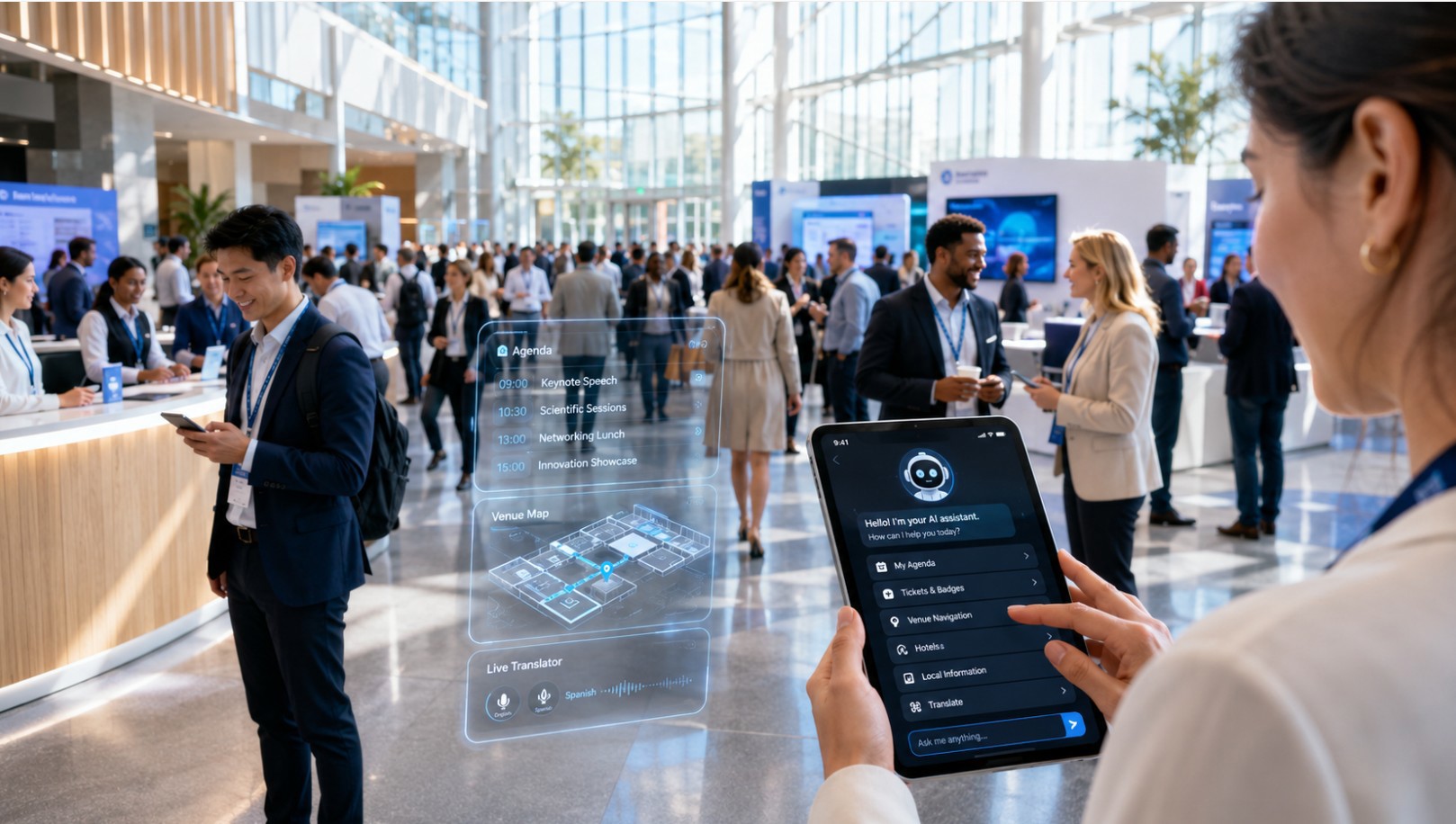
Once the conference begins, Nova can become something close to a 24/7 digital concierge. Participants can ask where a particular session is taking place, when a keynote begins, where registration desks are located, what restaurants are nearby or how to reach a specific exhibition hall. The assistant can help visitors navigate the agenda: “What sessions about cybersecurity are happening this afternoon?” Or discover relevant participants and activities: “Are there any networking events for healthcare technology companies?”
For large international events, this can significantly reduce pressure on physical information desks while giving visitors something even more convenient: assistance directly through the event website, on the device already in their hand. No queue required.
Speakers get an assistant too
Speakers usually receive plenty of instructions. They also receive them weeks before the event, in an email they may or may not be able to find when standing backstage five minutes before their session.
An intelligent assistant can provide immediate answers about presentation formats, schedules, technical requirements, speaker rooms, registration procedures and session locations. It can also direct speakers to the right documents or contacts when human assistance is genuinely required. The goal is not to eliminate human communication. Quite the opposite, it is to save human communication for situations where humans are actually useful.
Better networking, not just better navigation
One particularly interesting opportunity is helping visitors understand who and what is at the event. At a large trade show, hundreds of companies may be exhibiting. Few visitors have time to browse every profile. An intelligent assistant can help them narrow the field. A visitor might ask: “Which exhibitors provide industrial automation solutions?” Or: “Who is presenting research on renewable energy storage?” Or: “Which booths should I visit if I am looking for logistics software?”
Suddenly, the event website becomes more than an information portal. It becomes a discovery tool. And that creates value not only for visitors, but also for exhibitors and sponsors who want the right people to find them.
After the lights go off, Nova can keep working
The usefulness of the event website does not disappear when everybody flies home. Participants may still want presentation materials, recordings, certificates, invoices, exhibitor contacts or information about the next event.
The assistant can continue helping them navigate this content long after the venue has been dismantled. It can also help organizers understand what people were most interested in.
What questions appeared repeatedly?
Which speakers attracted attention?
Which topics generated the most inquiries?
What information was difficult for visitors to find?
Those conversations can become valuable feedback for improving the next event.
And what does the organizing team gain?
Quite a lot, really. Less repetitive work. Routine questions can be answered automatically.
24/7 availability. International participants do not have to wait for the organizing office to wake up.
Multilingual support. Visitors can communicate in the language most comfortable for them.
Consistent information. Everyone receives answers based on the same approved event content.
Better visitor experience. People spend less time searching and more time participating.
More opportunities for exhibitors and sponsors. The assistant can help visitors discover relevant companies, sessions and services.
Useful insights. Organizers can learn what participants actually want to know.
And perhaps most importantly, the event team gets something extremely valuable during conference week:
a little more time to deal with the things that cannot be automated.
Because there will always be those things. The keynote speaker will still miss a flight, someone will still bring a banner three meters wider than permitted, and someone, somewhere, will still ask where the conference is. But at least BizDriver can answer them instantly.