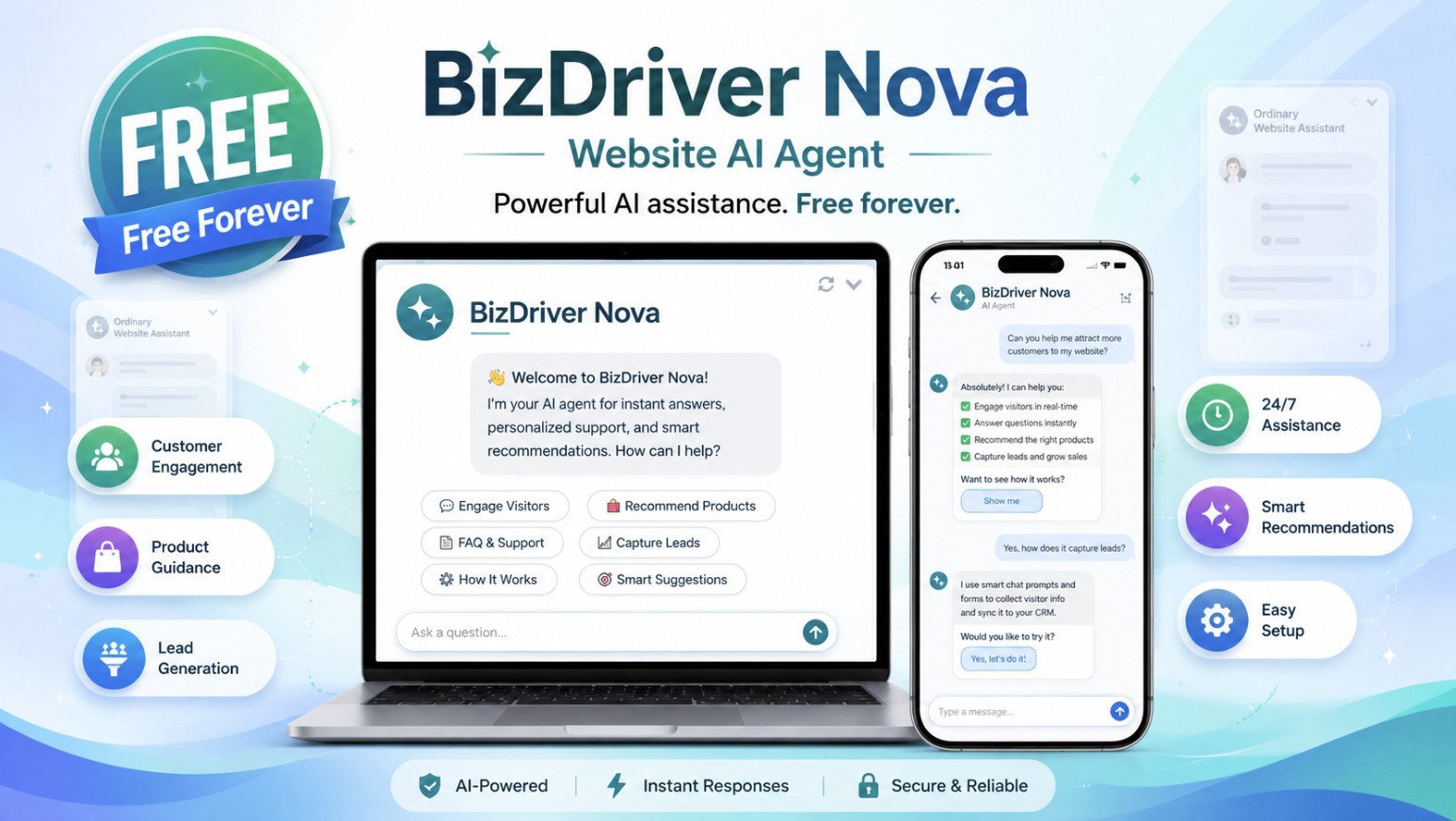
Why Most Website Visitors Leave Before Buying And How AI Agents Are Changing That
Imagine this. It's 10:30 PM. Sarah has been thinking about a cosmetic procedure for months, but she isn't ready to talk to a doctor yet. She isn't even ready to reveal her name, she simply wants answers: How much does the procedure cost? How long is recovery? Am I even a good candidate? Can I see examples? Can someone explain the process without pressuring me into booking an appointment?
Like millions of modern consumers, Sarah opens her laptop and starts searching. What happens next depends entirely on the communication system each company has chosen for its website. And that's where the story becomes interesting.
Website #1: The Contact Form From 2008
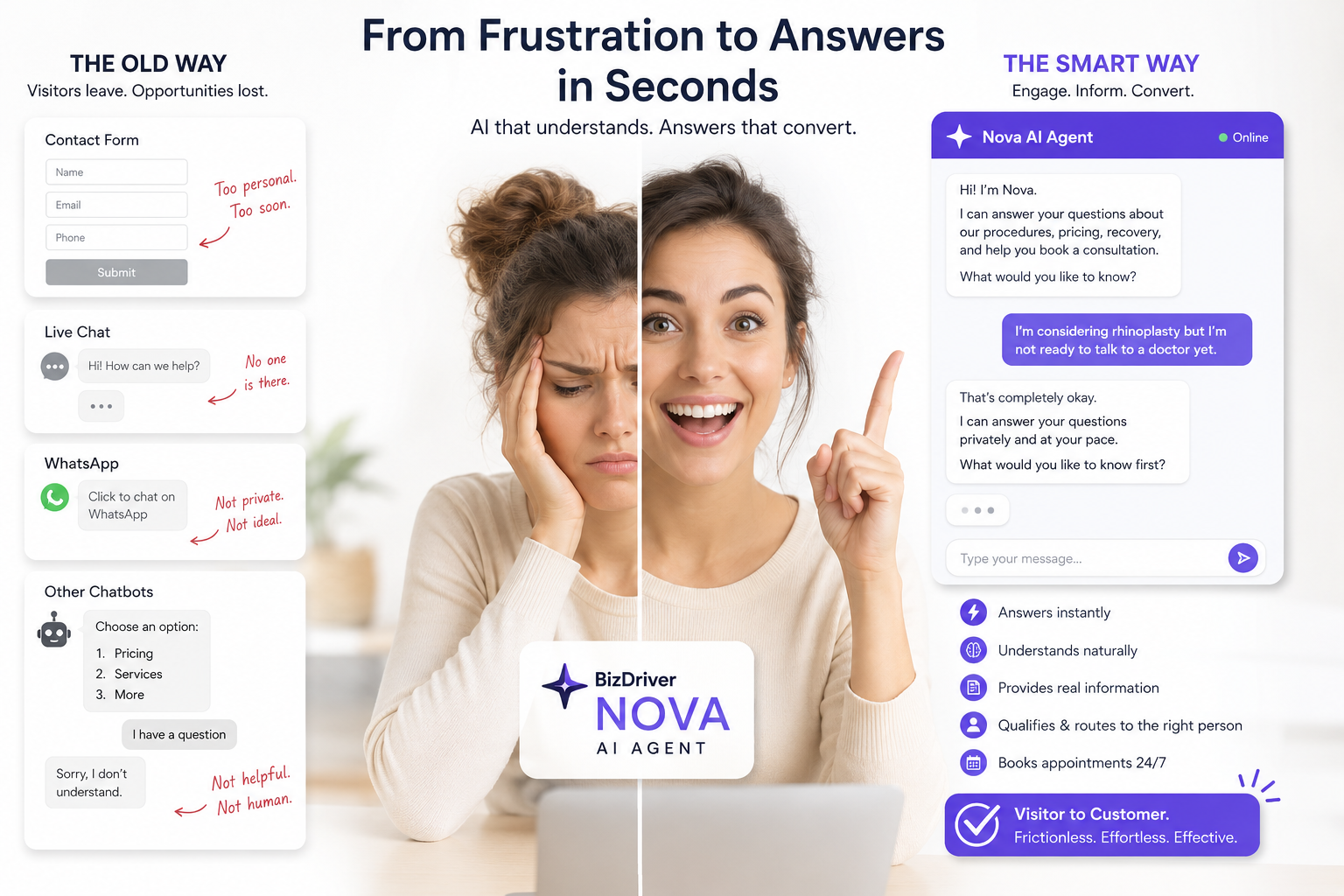
Sarah arrives at the first clinic's website. The website looks professional. A form pops up: "Leave your details and we'll contact you." Name. Phone. Email. Message. That's it.
Sarah stares at the form. She doesn't want to leave her phone number. She doesn't want a salesperson calling tomorrow morning. She doesn't even know whether the clinic can help her. She closes the tab. The clinic never knows she visited.
Website #2: The Live Chat That Isn't Live
The next clinic offers Live Chat. Promising. Sarah opens the chat window. "Hello, I would like to know the approximate cost of rhinoplasty." Five minutes pass. Ten minutes. Fifteen minutes. Eventually: "Our operators are currently offline. Please leave your email."
Sarah closes the chat. Another potential customer disappears.
Website #3: The WhatsApp Button
The third clinic proudly displays a WhatsApp icon. Sarah clicks. Now she's expected to start a conversation using her personal phone number. Immediately, her profile photo becomes visible. Her identity is no longer anonymous. For many medical, cosmetic, legal, financial, and personal services, that matters. Sarah hesitates. Then closes the window.
Another opportunity lost.
Website #4: The Traditional Chatbot
The fourth clinic has invested in a chatbot. Progress. The chatbot asks: "Choose one option." Pricing, Appointments, Services, Other
Sarah chooses Pricing. The bot replies: "Please call our office."
She asks: "Am I a good candidate for this procedure?" The chatbot responds: "I don't understand your question."
Three more attempts, three more failures, and... Sarah gives up. The chatbot successfully automated frustration.
Website #5: The BizDriver Experience
Then Sarah arrives at another clinic. A small message appears:
"Hi. I'm Nova. I can answer questions about our procedures, pricing, recovery times, and help you schedule a consultation. How can I help?"
No forms. No waiting. No pressure. No phone calls. No awkwardness.
Sarah types: "I'm considering rhinoplasty but I'm not ready to talk to a doctor yet. Can you tell me approximately how much it costs?"
Nova immediately responds. Not with a generic answer, but with the clinic's actual pricing information. Then Sarah asks: "How long is recovery?" Answer. "Will people notice?" Answer. "Can I fly after surgery?" Answer. "Do you have before-and-after examples?" Answer. "What if I am only interested in a consultation?" Answer. All within seconds.
No waiting, no human intervention required, no embarrassment, no pressure: just information. Exactly what Sarah wanted.
The Difference Isn't Chat. It's Understanding.
This is where many businesses misunderstand the role of AI: he goal isn't simply to place a chat box on a website but to help visitors make decisions. Traditional systems are built around communication, while BizDriver is built around understanding.
Nova can:
-
Understand natural language questions
-
Explain services in plain language
-
Retrieve information from company knowledge bases
-
Answer follow-up questions
-
Remember conversation context
-
Guide visitors through complex decisions
-
Collect lead information naturally
-
Route inquiries to the right department
-
Schedule appointments
-
Operate 24/7
-
Communicate in multiple languages
The result feels less like talking to software and more like talking to a knowledgeable company representative. Except that representative never sleeps.
After fifteen minutes of conversation, Sarah feels informed. More importantly, she feels comfortable.
BizDriver agent asks: "Would you like me to help arrange a consultation with one of our specialists?" This time Sarah says yes. And BizDriver already knows which procedure interests her, her concerns, her preferred dates, her location, and the information she already received. Instead of forcing Sarah to repeat everything, Nova forwards the entire context to the appropriate coordinator.
The clinic receives a qualified lead (not a cold inquiry from a random website visitor). It receives a potential patient who has already educated herself and expressed genuine interest.
The coordinator sees: "Interested in rhinoplasty. Asked about recovery, travel restrictions, consultation options, and pricing. Available next week." The right specialist receives the lead immediately. Then, a consultation slot is proposed, and an appointment is booked. All from a conversation that began anonymously.
Why This Matters For Small Businesses
Most small businesses assume their biggest challenge is getting more website traffic. In reality, many already have traffic. What they lack is a way to engage visitors effectively. Every day, potential customers leave websites because:
-
Nobody is available to answer questions
-
Information is difficult to find
-
Visitors aren't ready to talk to a salesperson
-
Traditional chatbots can't understand what people actually mean
The result is silent revenue loss. Visitors arrive. Visitors leave. Nobody learns why.
The New Competitive Advantage
The businesses winning online today are the ones that remove friction. The easier it is for customers to get answers, the more likely they are to buy. That's where AI agents like BizDriver create value. They prepare customers for your people: answer questions at midnight, educate visitors, qualify leads, route conversations and schedule appointments. They also ensure that when a human joins the conversation, they're already talking to someone who is informed, engaged, and ready to move forward.
In a world where customers expect instant answers, this creates difference between gaining a client and losing one forever.