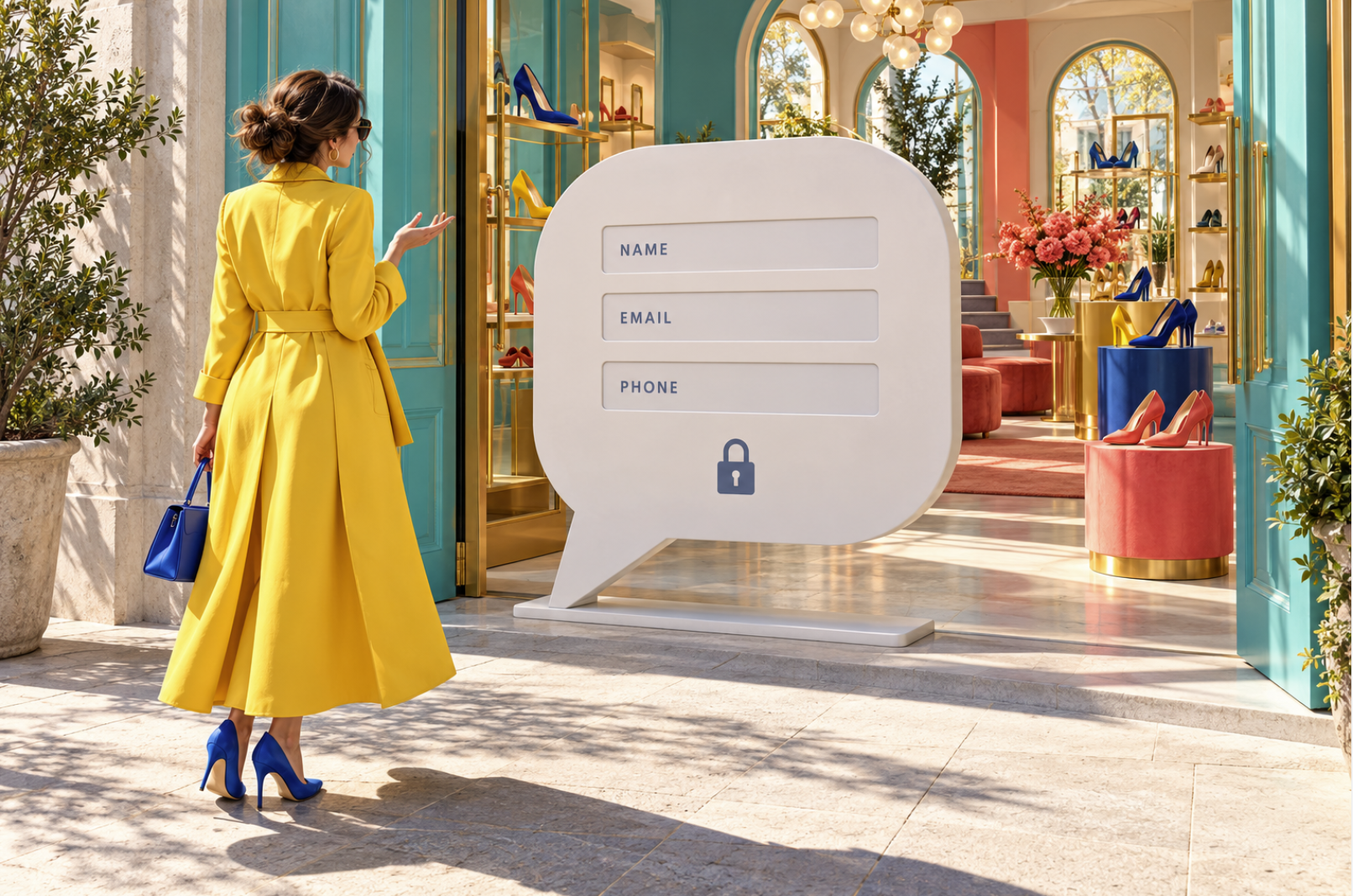
The Website That Learned to Sell After Hours
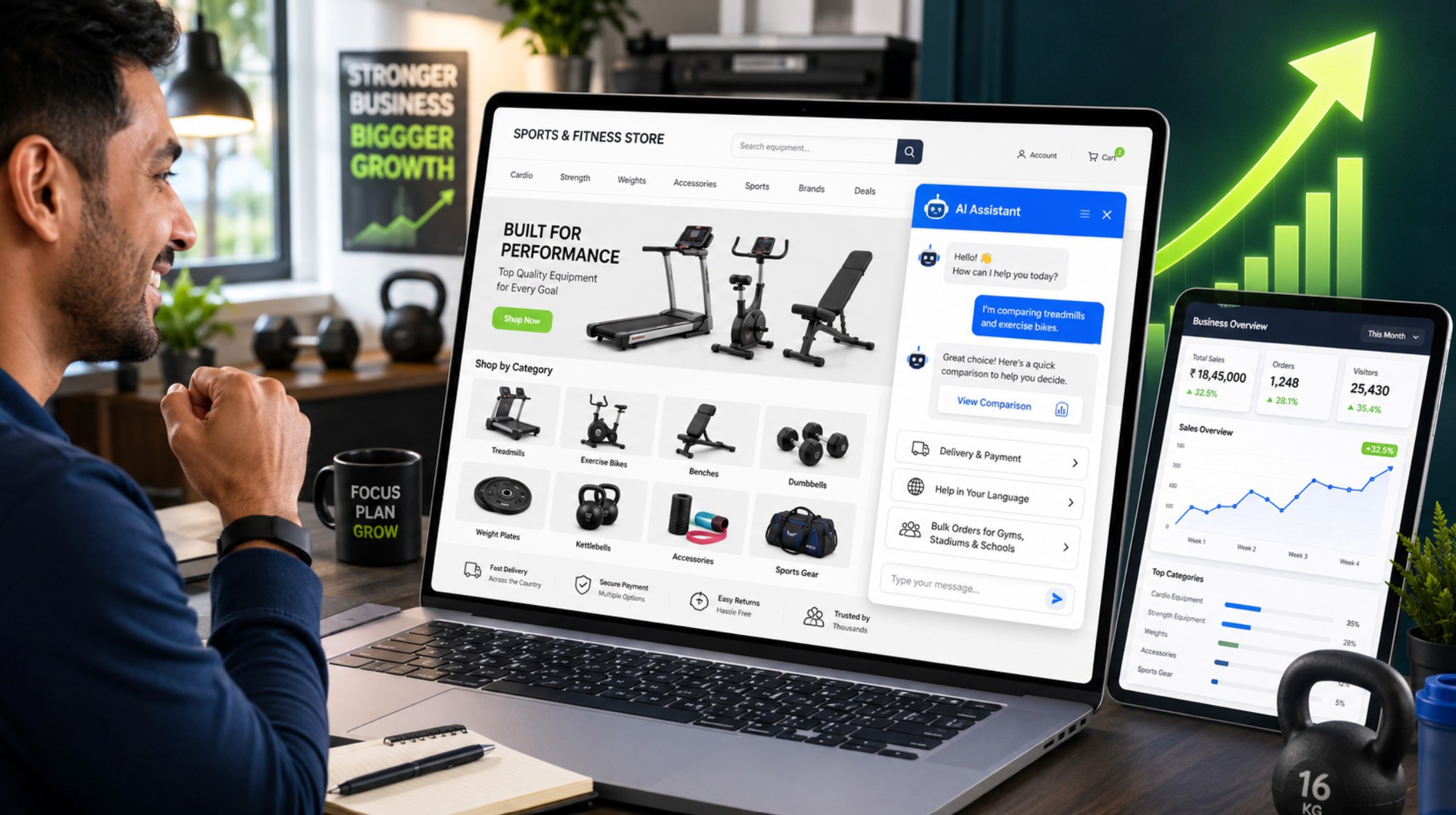
A sports equipment retailer had what looked like a very good website. Treadmills, exercise bikes, benches, weights, accessories, equipment for home gyms; everything was there. The company also supplied larger orders for gyms, sports schools, stadiums, fitness clubs and outdoor sports facilities.
And yet something was missing. The website attracted visitors, but too many of them left without buying anything — or even without asking a question. The company had tried the obvious solutions. Phone numbers were easy to find. There were Contact Us buttons throughout the site. A live chat had been added. There was even a WhatsApp button for customers who preferred messaging.
The problem was that people do not shop according to office hours. A potential customer in another time zone might arrive at 11 p.m. and want to know whether a particular treadmill would fit into a small training room. A gym owner might be comparing ten different benches and wondering which models were suitable for commercial use. A sports school might need twenty pieces of equipment and want to understand whether bulk discounts were available. An international buyer might have questions about payment methods, shipping, warranties or delivery times, but prefer asking them in Spanish, German or Ukrainian rather than searching through pages of information in English. And many visitors simply did not want to read several pages before making a decision. When nobody answered immediately, they left. well, some probably came back, others probably opened another supplier's website.
Then an unusual email arrived
One day the business owner received an email from BizDriver.ai. It did not ask him to schedule a meeting, prepare a specification or spend weeks integrating another complicated system. Instead, the message simply invited him to try an intelligent website assistant that had already been prepared for his store.
There was a link. He clicked it, and there was his website, with a small assistant waiting in the corner. Curious, he started asking questions. "Which treadmill would you recommend for a small apartment?" - The assistant answered. "What is the difference between these two exercise bikes?" - Another clear answer. "Do you offer discounts if I buy equipment for an entire gym?" - The assistant explained the available information and guided him toward the appropriate next step.
Then he tried another language. The assistant switched languages immediately. It felt almost as if someone had read every publicly available page of the website, remembered everything and was now patiently sitting there waiting for customers. In fact, that was essentially what had happened.
The website suddenly became conversational
BizDriver.ai's intelligent assistant had analyzed the publicly accessible information on the company's website and learned how to help visitors find it. But instead of forcing customers to navigate menus, product pages, FAQs, delivery policies and payment instructions, the assistant turned that information into a conversation.
A visitor could simply ask:
"Which exercise bike is better for intensive daily use?"
"Can you compare these three models?"
"What equipment would I need for a 100-square-meter gym?"
"Do you deliver to my country?"
"What payment options are available?"
"Where can I find information about warranties?"
"Can you show me the page where I can order this?"
And the assistant could guide them. It could explain specifications in simpler language, help compare products, suggest suitable alternatives, clarify delivery and payment information, direct customers to relevant pages and help them narrow a large catalog to a manageable shortlist. For a larger commercial customer, the conversation could be even more valuable. Instead of browsing hundreds of products, a gym owner could describe what they were building: "I am opening a small fitness club. I need equipment for cardio, strength training and free weights. What should I look at?"
Now the website was no longer just displaying products. It was helping people shop.
And it never said, "We're closed"
Perhaps the biggest change was the simplest one. The assistant was there when the sales team was not. Late at night. Early in the morning. On weekends. For customers in another country. And in the visitor's preferred language. That meant fewer promising visitors reached a dead end simply because the company happened to be closed.
It also meant that customers who were reluctant to call (or who did not speak the company's language confidently) finally had an easy way to ask questions. The assistant could handle the first stage of the conversation and, when human attention was needed, help move the customer toward contacting the company.
Something else started happening
Visitors stayed longer. Instead of landing on one product page, checking the price and leaving, they started asking questions. One question led to another.
"Would this work in a commercial gym?"
"What about this model?"
"Can you compare them?"
"Do you have something less expensive?"
"What would you recommend if I need ten units?"
The website became less like a catalog and more like a helpful salesperson who happened to know the entire store. That richer interaction can make a website substantially more useful: visitors explore more products, discover information they might otherwise miss and have fewer reasons to abandon the site because they cannot find an answer. And, naturally, some of those conversations end where every retailer wants them to end: with a purchase.
The unexpected marketing effect
Then the owner noticed something he had not planned for. Customers talked about it. "You should try their website. Just ask the assistant what you need." A technology that had originally been introduced to help answer questions was becoming part of the customer experience itself. People remembered the convenience. They told colleagues. They showed friends. For the retailer, the assistant had become more than another support channel. It was a small additional sales presence working inside the website, helping customers when the human team was unavailable and making the existing website content much easier to use.
What had actually changed?
The company did not suddenly hire a multilingual 24/7 sales department. It did not rebuild its online store. It simply added an intelligent layer between the information it already had and the customers who were trying to understand it.
That layer could:
-
answer questions 24/7;
-
communicate in multiple languages;
-
explain product specifications conversationally;
-
compare products and models;
-
recommend options based on a visitor's needs, available space or budget;
-
help customers navigate large catalogs;
-
explain payment, shipping, returns and warranty information;
-
direct visitors to relevant product and checkout pages;
-
support both individual buyers and larger B2B purchasing conversations;
-
capture interest even when the sales team is offline;
-
make existing website information easier to discover and use.
And unlike a traditional chat widget, it did not depend on someone sitting behind the screen waiting for the next message.
And here is perhaps the nicest part
Today, a business can start using a BizDriver.ai intelligent website assistant for free. Under the free plan, businesses with fewer than 500 messages per month can continue using the assistant without paying for the service. For a small or growing business, that makes the calculation rather simple.
Your website already has visitors. Your products are already there. Your FAQs, payment information, delivery terms and product descriptions are already there. The question is: How many customers leave because they cannot find the right answer quickly enough?
An intelligent assistant gives those visitors one more reason to stay, ask, explore - and buy. Sometimes increasing online sales does not require attracting an entirely new audience. Sometimes it begins by taking better care of the visitors who are already standing at your digital door.